Learning Agents
temporal and decision memory
An agent can improve its own decisions from a log of what it decided, when, and what happened next — without any weight update — and the gain is bounded by the quality of the outcome feedback, not by the model.
A validation run. Researched position, no experiment.
Confidence
54%human-committedExpiry
27duntil review · 30 Sep 2026Lead time
—not yet mainstream · opened 14 Apr 2026Ownership
DDDavid Diazfortnightly cadenceWhere it is
unattributedThe field split from Agentic Memory in April once it was clear that remembering and learning are different problems. A memory layer recovers what happened; a learning agent changes what it does next because of it. Everything credible we have seen uses the same three parts: a temporal decision log, an outcome-feedback channel that arrives days or weeks later, and a policy step that turns the pair into a rule the agent consults before acting. The published results are narrow (coding agents, customer-support routing) and the gains are real but small — 6 to 14 points on task success in the papers we rate, and only where the outcome signal is clean. Nobody has shown it on a workload where outcomes arrive late and noisy, which describes every claims and credit process we deliver into. Our own experiment on a claims agent is running and has not concluded.
Why a Quantium decision hinges on it
unattributedEvery agent we ship is stateless in the way that matters: it makes the same class of mistake on Monday that it made on Friday, and the delivery team fixes it by editing a prompt. If the agent can learn from its own decision history, the maintenance model for agent deployments changes — fewer prompt patches, a smaller ops team, and an auditable reason for every behavioural change. That is the exact question two banking clients asked this half. It also carries the privacy problem forward: a decision log about customers is personal information under the APPs, and the forgetting mechanism from Agentic Memory has to exist before this touches client data.
What it actually is
composed from the recordsAn agent can improve its own decisions from a log of what it decided, when, and what happened next — without any weight update — and the gain is bounded by the quality of the outcome feedback, not by the model. That is the lab's one-line position on it, which is not the same as an explanation.
The shape the field is converging on, from the most authoritative source in it: Self-modifying agent behaviour in a critical operation needs an approval step to be CPS 230 compliant.signal
This is the section a page most needs a person for, and the one composition is worst at. Nobody has written the plain-language version — what the idea is, in words that assume nothing — and it is the first thing a reader who has never met the term needs.
Why now
composed from the recordsThe lab opened this field on 2026-04-14, and it has not reached mainstream awareness yet. Everything below is what has moved since.
A term arrived: Agent platform ships 'Learned Policies' with a structured policy store That is the earliest reliable signal of a field being born — the vocabulary settles before the capability does.signal
What shipped: Agent platform ships 'Learned Policies' with a structured policy store (Vendor changelog, 2026-07-24). Tooling arriving is what moves a field from argument to something a team could try.signal
And the rule moved: APRA CPS 230 guidance: material changes to automated decision behaviour are a change to a critical operation In a regulated vertical that usually decides the timing more than the technology does.signal
Demand is rising on it rather than steady — “Why does the agent make a different call on the same case two weeks apart?” — which is the difference between a field worth watching and one worth doing something about.demand
What it changes in a system
composed from the recordsWhat changes, concretely: A coding agent with a decision log and test-outcome feedback cut repeat failures on the same error class by 38% over 200 tasks in the paper we rate highest; no weights touched.
Nothing is shipped as a default yet, so adopting this is a piece of work rather than a configuration change. That is usually the difference between a field being interesting and being used.
What is in the way
composed from the recordsThe binding constraint is reliability: it works and is not yet dependable enough to put near a customer. Everything upstream of that is solved and everything downstream of it is waiting.
It is also gated on another field: agentic-memory — privacy-safe forgetting mechanism demonstrated in x-memory-bench follow-up. Until that trigger fires, effort here compounds slowly.cluster
Workforce readiness is low: No delivery team has run a learning loop in production. Agent-estimated. A recommendation needing skills the firm does not hold is an aspiration rather than an action, and it routes to the enablement agenda instead of the delivery one.
The argued case against it is the red team's, further down this page, and it is deliberately one-sided — this section is what stands in the way mechanically, not what somebody thinks of it.
2 of 6 explanatory sections are written; the rest are composed until somebody takes them.
Business priority
Loosely alignedClients are asking
- “Why does the agent make a different call on the same case two weeks apart?”4 engagements · $1M–5M · rising
Priority orders what you see. It never changes what the evidence says — a plan-critical field with nothing tested is still signal tier.
Field attributes
What people have written
Write oneNothing yet. The person who knows a claim is wrong is usually not the person who wrote it.
A note never travels further than the thing it is written on.
Position
What is demonstrated, what is hype, what would have to be true.
The shape every position request answers. Signal-tier fields carry a draft; assessed and tested fields carry a validated one.
- 01A coding agent with a decision log and test-outcome feedback cut repeat failures on the same error class by 38% over 200 tasks in the paper we rate highest; no weights touched.
- 02A support-routing agent that logs routing decisions and reads the resolution outcome three days later improved first-time-right routing by 9 points over six weeks in a vendor case study we partially reproduced.
- 03The policy step can be a plain text rule list the agent reads before acting; a structured policy store did not beat it in the two comparisons that exist.
- 01'Self-improving agents' as a product category. Every vendor claim we opened reduces to a prompt that includes the last N outcomes; that is not learning, it is a longer context.
- 02Reinforcement-learning language applied to what is really a lookup. There is no gradient anywhere in the systems that work.
- 03Claims that the gain compounds indefinitely. In every published run the curve flattens within a few hundred decisions.
- 01The gain has to survive an outcome signal that arrives four to eight weeks late and is wrong a fifth of the time — the claims-process reality.
- 02A learned rule has to be inspectable and revocable by a human, or no risk function will let it near a credit or claims decision.
- 03Decision logs about customers need a forgetting mechanism that satisfies APP 11 and CPS 230 record-keeping at the same time; those pull in opposite directions.
- 01Conclude x-learning-agent-memory before any client conversation goes past a position; the kill condition is a gain under 5 points on late-feedback tasks.
- 02If it passes, write a recommendation scoped to agents with a measurable outcome signal and explicitly not to agents without one.
- 03Keep the field gated on the privacy-safe forgetting mechanism from Agentic Memory; do not ship a decision log on client data before it exists.
Signals · 9 in this cluster
What the cluster is made of.
Every item carries its source, tier and sightings. Detector-found signal sits beside human drops; downstream they are indistinguishable except by provenance.

Decide, Observe, Revise: Temporal Decision Logs for Non-Parametric Agent Improvement
Coding and routing agents keep a timestamped log of decisions and outcomes and derive text rules from it before each task. Repeat failures on the same error class fall 38% over 200 tasks. The curve flattens after roughly 300 decisions and the authors say so.
extracted claimA decision log with outcome feedback improves task success without a weight update, and the gain saturates within a few hundred decisions.

Agent platform ships 'Learned Policies' with a structured policy store
First vendor to ship a policy store as a product. Marketing says the agent 'learns from every interaction'; the docs describe a rule table the agent reads. No published comparison against text rules.
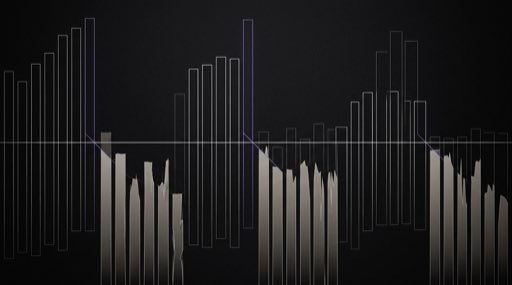
LateFeedback-Agents: task suite with delayed, noisy outcome signals
The only public benchmark that delays the outcome signal and corrupts a share of it. Every published learning method loses most of its gain at 20% label noise and 50-step delay. We adopted it for x-learning-agent-memory.
extracted claimLate, noisy outcome feedback removes most of the gain from decision-log learning.
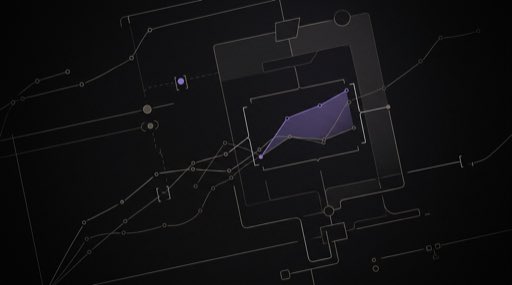
Logged from Claude Code: outcome-tagged decision log stopped a recurring PR-review mistake
Product engineer gave a review agent a log of its past review decisions with the merge outcome attached. The agent stopped flagging a false-positive pattern it had raised on eleven previous PRs. One repo, one engineer, tried tier.

'Your self-improving agent is learning from noise'
Argues that most enterprise outcome signals are confounded by human intervention and that agents learning from them will learn the interventions, not the task. Sharp, widely shared, and consistent with the benchmark result.

'If the agent changes how it decides, who approved the change and where is it written down?'
Asked by a head of operational risk during a servicing-agent design review. Became the inspectability requirement in the experiment's kill condition. Two other engagements asked a version of it since.

Panel: 'Agents that get better on the job'
Demand-band signal. Three of four panellists described a decision-log design; one described fine-tuning and was argued down by the others. The phrase 'decision memory' appeared for the first time on a conference stage.
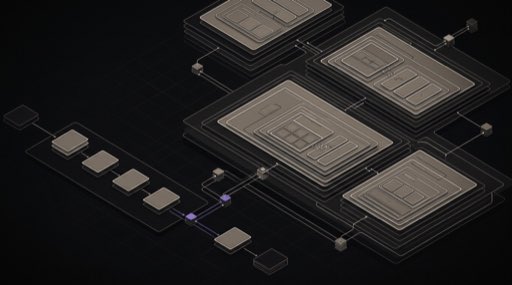
reflectloop — outcome-conditioned rule extraction for tool-using agents
Small library that turns a decision log into a rule list the agent reads before acting. We ran it against a structured policy store on two tasks; plain text rules matched or beat it. Author is a former lab researcher.

APRA CPS 230 guidance: material changes to automated decision behaviour are a change to a critical operation
Prudential guidance clarifies that behaviour change in an automated system supporting a critical operation is itself a change requiring control. A rule an agent learned for itself is a change nobody approved. Defines the design constraint for the field.
extracted claimSelf-modifying agent behaviour in a critical operation needs an approval step to be CPS 230 compliant.
Claims · 4 supporting, 1 refuting
The atoms.
A document cannot go stale; an assertion can. Claims are immutable and stamped with the extractor that produced them, so staleness, diffs and the graveyard operate at claim level.
Learned behaviour that cannot be inspected and revoked by a human will not be permitted near a regulated decision in AU banking or insurance.
A temporal decision log plus outcome feedback improves agent task success by 6–14 points with no weight update, on tasks where the outcome signal is clean and arrives within the session.
The gain flattens within a few hundred decisions; there is no evidence of compounding improvement beyond that.
Late, noisy outcome feedback destroys the gain; nobody has demonstrated learning where outcomes arrive weeks after the decision.
A learning agent needs a structured policy store; text rules do not scale past a few dozen learned behaviours.
Position history · the diff is the product
3 validation runs against a fixed brief. Confidence 40% → 54%.
Late, noisy feedback is the open problem and the experiment is aimed at it. Structured policy stores do not beat text rules yet. Field stays emerging until x-learning-agent-memory concludes.
- The gain flattens within a few hundred decisions; there is no evidence of compounding improvement beyond that.
- Late, noisy outcome feedback destroys the gain; nobody has demonstrated learning where outcomes arrive weeks after the decision.
- c-learning-agents-4 ↓ 0.45 → 0.30
Scoring · ordinal bands
Agents propose. A named human commits.
Uncommitted scores are visibly marked and never leave the building. Bands, not point estimates — false precision is the tell that a number was generated rather than derived.
Impact
committed · AWChanges the maintenance model for every deployed agent if it works on late-feedback tasks.
Timeline
committed · DDWorks now on clean-feedback tasks; the regulated, late-feedback case is two years off on current evidence.
TAM
agent-estimatedAgent-estimated from agent-ops tooling spend. Uncommitted.
Cost
committed · DDType 3 experiment, a pair for three weeks, plus a synthetic late-feedback corpus that did not exist.
Cost of being wrong
committed · TBA learned rule that is wrong applies itself silently and repeatedly. This is the field's defining risk.
Demand
committed · AHTwo banking engagements asked directly; the rest ask about memory and mean this.
Workforce readiness
agent-estimatedNo delivery team has run a learning loop in production. Agent-estimated.
Relevance · per vertical
Why it matters here, or explicitly does not.
Ranking is per vertical, not global. Sector owners commit notes against agent drafts.
Servicing and dispute agents make the same misjudgement repeatedly; the fix today is a human editing a prompt, which does not scale and leaves no audit trail of why behaviour changed.
Mechanism · Decision log keyed on case; learned rules held in a reviewable register that risk signs off before they take effect.
Claims triage has a clean outcome signal (was the claim paid, was it disputed) that arrives late. This is the hardest and most valuable case.
Mechanism · Outcome feedback joined from the claims system at settlement; policy step runs weekly, not per decision.
Merchandising assistants have outcomes (sell-through) but attribution to a single decision is weak; the learning signal may be noise.
Mechanism · Would need a decision-to-outcome attribution model before the loop closes.
Red team · the strongest case against
The strongest case against: what the papers call learning is prompt accretion, and prompt accretion has a known failure mode — the context fills with special cases until the agent's behaviour becomes unpredictable and nobody can say which rule caused which decision. The published gains are on tasks with instant, binary feedback; the enterprise tasks that matter have neither. We may be extrapolating from a regime that does not exist in our clients.
- —Every positive result is on tasks where the outcome is known within the session. Our clients' outcomes arrive weeks later, are partially wrong, and are confounded by human intervention.
- —Rule accumulation is unbounded. Nobody has shown a pruning policy, and without one the agent's context grows until behaviour degrades — the same failure the field is meant to fix.
- —A model release that changes base behaviour invalidates every learned rule at once. The learning loop would need to be re-run per release, which nobody has costed.
Source diversity
- ML research35%
- Open-source infra20%
- Vendor10%
- Regulator10%
- Internal / Engel25%
A field supported by one epistemic community is a flag, not a finding.
Cross-pollination · typed joins
Connected, not merely similar.
Enabling, compounding, substituting, blocking. A satisfied dependency trigger is a far stronger signal than semantic proximity.
Trigger · privacy-safe forgetting mechanism demonstrated in x-memory-bench follow-up
When the trigger fires, this field is resurfaced automatically. Watchable rather than parked.
The decision log is an episodic store with an outcome column. Without a working memory layer there is nothing to learn from.
If weights can be updated safely from use, most of the log-and-rule machinery goes away. Not before 2029 on current evidence.
A learned rule needs a regression suite to prove it did not break something else; the canary suite is the natural home.
Learned rules and compiled skills are the same artifact seen from the agent's side and the human's side.
Share graph
Provenance running forward.
Discovery, not accountability. No counts, no rankings, no rollups to managers.
Convergence · who else is here
- OVOliver Vu · Analyst · product engineering2 drops
- DDDavid Diaz · Lead Analytics Specialist · agents1 drop
- MLMichelle Lam · Analytics Lead · evals1 drop
- TBTravis Boast · Lead, AI Program Office · red team & assurance1 drop
- AHAmber Hall · Sector owner · Banking1 drop
Several people’s drops meet here. An informal working group already exists and probably does not know it.
Lineage
What this field produced, and what it killed.
Experiments, recommendations and graveyard entries stay attached. The reasoning that killed a claim is the reusable asset.
Open questions · return to the pile
Every run leaves a record. Separately, its question either closes or returns to the pile with notes — which is what the next person proposing the same thing will see.
- 01What is the minimum outcome-signal quality below which a learning loop does more harm than good?
- 02Who prunes learned rules, on what schedule, and what does a pruning mistake cost?
- 03Does a base-model release invalidate learned rules wholesale, and how would we detect it?
Notes · anyone in the firm
What people have written on this.
The person who knows a claim is wrong is usually not the person who wrote it. Corrections, objections and questions are owed an answer and stay open until the field owner says what they did; context and use notes stand as they are.
Notes · 0
Anything here reaches at most the firm — a note cannot travel further than what it is written on.Nothing written on this yet. The useful notes are the ones from people who are not in the lab — that is where the correction usually comes from.