Agentic Memory System
Long-running agents need a memory layer that separates what happened from what was learned; raw vector recall over transcripts is the wrong abstraction and will be replaced by structured episodic stores with summarised recall.
Experiment run, measured result. The only tier that becomes a recommendation.
Confidence
72%human-committedExpiry
29duntil review · 2 Oct 2026Lead time
+4moahead of mainstream awarenessOwnership
DDDavid Diazfortnightly cadenceWhere it is
unattributedThe field moved fast in 2026. Every major harness now ships some memory primitive, and the open question is no longer whether agents need memory but which shape survives contact with a 40-session workload. Our own bake-off found retrieval latency and recall precision diverge sharply above ~50k tokens of history, which is exactly where enterprise support and claims agents live. Vendors are converging on a three-store design (working, episodic, semantic) but the consolidation step — turning episodes into reusable knowledge — is still hand-rolled everywhere we looked.
Why a Quantium decision hinges on it
unattributedThree live client patterns (banking servicing, insurance claims triage, retail merchandising) hit the same wall: the agent forgets what it decided last week and re-derives it, expensively and sometimes differently. A defensible default for the memory layer is worth more to delivery this quarter than any model choice. It also gates two near fields — Learning Agents and Personal Wiki — which assume a memory substrate exists.
What it actually is
composed from the recordsLong-running agents need a memory layer that separates what happened from what was learned; raw vector recall over transcripts is the wrong abstraction and will be replaced by structured episodic stores with summarised recall. That is the lab's one-line position on it, which is not the same as an explanation.
The shape the field is converging on, from the most authoritative source in it: Retrieval latency exceeds generation latency for naive vector memory once history passes ~50k tokens.signal
This is the section a page most needs a person for, and the one composition is worst at. Nobody has written the plain-language version — what the idea is, in words that assume nothing — and it is the first thing a reader who has never met the term needs.
Why now
composed from the recordsThe lab opened this field on 2026-02-10 and it reached mainstream awareness on 2026-06-15. The gap between those two dates is the lead time the lab is measured on.
A term arrived: Two agent platforms ship 'memory' primitives in the same week That is the earliest reliable signal of a field being born — the vocabulary settles before the capability does.signal
What shipped: Two agent platforms ship 'memory' primitives in the same week (Vendor changelogs, 2026-08-06). Tooling arriving is what moves a field from argument to something a team could try.signal
Demand is rising on it rather than steady — “Why does the agent make a different call on the same case two weeks apart?” — which is the difference between a field worth watching and one worth doing something about.demand
What it changes in a system
composed from the recordsWhat changes, concretely: Structured episodic store with summarised recall beat raw vector recall on a 40-session support corpus: +19 points recall precision, 0.6× latency at 50k+ tokens of history (x-memory-bench).signal
Measured rather than argued: Validated. Episodic+summary beat vector recall by 19 points precision at 50k+ tokens and ran at 0.6× its p50 latency. Graph memory won only on entity-lookup. Consolidation cut repeat-decision variance from 31% to 8%. Published as r-memory-layer; g-vector-memory-v1 superseded.experiment
There is already a shipped default — memory.store = episodic-summarised · skill: cavendish/memory-layer — so a team adopting this is changing a setting rather than starting a project.
What is in the way
composed from the recordsThe binding constraint is reliability: it works and is not yet dependable enough to put near a customer. Everything upstream of that is solved and everything downstream of it is waiting.
Workforce readiness is medium: Consolidation policy still needs a research engineer. Agent-estimated. A recommendation needing skills the firm does not hold is an aspiration rather than an action, and it routes to the enablement agenda instead of the delivery one.
Something here has already been killed: Vector-store memory as the agent's long-term memory, on the memory bake-off answered the question with a different design: structured episodic store with summarised recall beat raw vector recall on precision and latency above 50k tokens of history.graveyard
The argued case against it is the red team's, further down this page, and it is deliberately one-sided — this section is what stands in the way mechanically, not what somebody thinks of it.
2 of 6 explanatory sections are written; the rest are composed until somebody takes them.
Business priority
Plan criticalClients are asking
- “Why does the agent make a different call on the same case two weeks apart?”4 engagements · $1M–5M · rising
Priority orders what you see. It never changes what the evidence says — a plan-critical field with nothing tested is still signal tier.
Field attributes
What people have written
All 11 owed an answer — objection, open since 27 Aug 2026.
- ATAndrew TranObjectionThree of the five claims on this field cite the same benchmark run. That is one experiment wearing five hats, and the co…
A note never travels further than the thing it is written on.
Position
What is demonstrated, what is hype, what would have to be true.
The shape every position request answers. Signal-tier fields carry a draft; assessed and tested fields carry a validated one.
- 01Structured episodic store with summarised recall beat raw vector recall on a 40-session support corpus: +19 points recall precision, 0.6× latency at 50k+ tokens of history (x-memory-bench).
- 02Consolidation (episodic → semantic) reduces repeat-decision variance; agents re-derived the same policy decision differently 31% of the time without it, 8% with it.
- 03Three harnesses (Claude Code, LangGraph, a bespoke Python loop) can share one memory store through a thin adapter — vendor lock-in is avoidable.
- 01'Infinite context' claims from long-context models. Recall precision over a 1M-token window is not the same as remembering — cost and latency are the product, and both scale badly.
- 02Memory as a bolt-on SaaS. Most of the value is in the consolidation policy, which is domain-specific and will not come from a vendor.
- 03Graph memory as a universal answer. It helped on entity-heavy tasks and hurt on everything else in our runs.
- 01A consolidation step that a delivery team can configure without a research engineer — currently the step we hand-roll every time.
- 02Recall precision holding above 0.85 at 200k tokens of history, which nobody has shown on a real workload.
- 03A privacy-safe forgetting mechanism for client PII inside episodic stores — required before Type 4 work touches client data.
- 01Ship r-memory-layer as the delivery default for any agent with more than ten sessions of history.
- 02Run the bench again in Q4 against Zep and Mem0 as they stand in Q4; re-baseline if the extractor changes.
- 03Open Learning Agents as a dependent field once the forgetting mechanism exists.
Signals · 10 in this cluster
What the cluster is made of.
Every item carries its source, tier and sightings. Detector-found signal sits beside human drops; downstream they are indistinguishable except by provenance.
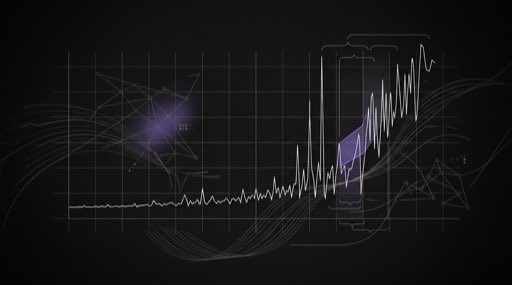
Memory bake-off: episodic+summary beats vector recall at 50k+ tokens
Four memory designs run against a 40-session support corpus with held-out decision-consistency questions. Episodic store with summarised recall won on precision and latency; graph memory won only on entity-lookup tasks.
extracted claimAbove ~50k tokens of history, retrieval latency — not storage — is the dominant cost of an agent memory layer.

Two agent platforms ship 'memory' primitives in the same week
Both expose working, episodic and semantic stores. Neither documents the consolidation policy. Naming event: 'episodic' displaced 'conversation history' in both changelogs.
extracted claimVendors are converging on a three-store memory design.
Logged from Claude Code: summarised recall cut re-derivation in the merchandising assistant
Product engineer logged from a session: swapping raw transcript retrieval for episode summaries stopped the assistant re-planning the category review each session. Attributed, tried tier, decays fast.
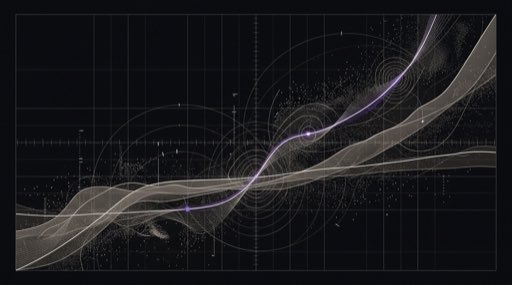
Latency-Bounded Recall: Memory Retrieval Costs in Long-Horizon Agents
Measures retrieval cost as history grows across five memory architectures. Finds a knee at 40–60k tokens where naive retrieval latency exceeds generation latency.
extracted claimRetrieval latency exceeds generation latency for naive vector memory once history passes ~50k tokens.

Frontier lab hiring 'Memory Systems Research Engineer' ×4
Four openings with identical wording. Argus inference: a first-party memory product is in progress. Carried as an inference, not a fact.

'Why does the agent make a different call on the same claim two weeks apart?'
Unanswered client question logged by the delivery lead. Became the decision-consistency task in the bench. This is the demand signal that elected the field.

Keynote: 'Memory is the new context engineering'
Demand-band signal. The phrase 'memory layer' appeared in six keynote titles at the event, up from one last year. Cross-band ignition with band-1 releases two months later.

'You don't need a memory layer, you need a bigger window'
Argues that 1M-token windows make explicit memory obsolete. Widely shared; our measurements contradict it on cost and precision. Kept as the strongest disconfirming voice.
LongMemEval-2: decision-consistency split
Public benchmark we adapted for the bake-off. The consistency split is the closest public proxy to the client question above.
Claims · 4 supporting, 1 refuting
The atoms.
A document cannot go stale; an assertion can. Claims are immutable and stamped with the extractor that produced them, so staleness, diffs and the graveyard operate at claim level.
Retrieval latency dominates memory-layer cost above ~50k tokens of accumulated history, regardless of store type.
Summarised episodic recall beats raw chunk retrieval on decision-consistency tasks by a wide margin (>15 points).
Vendors are converging on a working/episodic/semantic three-store design; the consolidation policy is where they diverge.
Graph-structured memory improves entity-heavy tasks and degrades general tasks; it is not a default.
Long-context windows make an explicit memory layer unnecessary for most workloads.
Position history · the diff is the product
4 validation runs against a fixed brief. Confidence 45% → 72%.
Bench confirms the default. Vendors converging on three-store design; consolidation policy is the differentiator and remains hand-rolled. Recommendation published.
- Vendors are converging on a working/episodic/semantic three-store design; the consolidation policy is where they diverge.
- c-agentic-memory-1 ↑ 0.74 → 0.84
Scoring · ordinal bands
Agents propose. A named human commits.
Uncommitted scores are visibly marked and never leave the building. Bands, not point estimates — false precision is the tell that a number was generated rather than derived.
Impact
committed · AWTouches every multi-session agent pattern we deliver.
Timeline
committed · AWAlready in production patterns; the question is which shape.
TAM
agent-estimatedAgent-estimated from memory-layer vendor funding and agent-platform spend. Uncommitted.
Cost
committed · DDOne engineer, two weeks per bench cycle.
Cost of being wrong
committed · TBWrong default is expensive to unwind across three patterns, but not catastrophic.
Demand
committed · AHAsked in four banking engagements this half; two RFPs name 'agent memory' explicitly.
Workforce readiness
agent-estimatedConsolidation policy still needs a research engineer. Agent-estimated.
Relevance · per vertical
Why it matters here, or explicitly does not.
Ranking is per vertical, not global. Sector owners commit notes against agent drafts.
Servicing agents that span weeks of customer interaction. Consistency of decisions is a conduct-risk question, not a UX one.
Mechanism · Episodic store keyed on customer + case; consolidation policy reviewed by risk.
Claims triage where the agent's prior reasoning on a claim must be recoverable and auditable.
Mechanism · Episodic entries double as the audit trail; semantic store holds triage doctrine.
Merchandising assistants re-derive category strategy each session without memory.
Mechanism · Semantic store seeded from range reviews; episodic from planner sessions.
Record-keeping obligations may make episodic stores a compliance asset or a liability; unclear which.
Mechanism · Depends on whether episodic entries count as records under the Archives Act.
Red team · the strongest case against
The strongest case against: memory is a symptom of poor task decomposition. Well-scoped agents with good tool access and a decent retrieval layer over source-of-truth systems do not need to remember; they look things up. Our bench may have measured the cost of bad decomposition, not the value of memory.
- —The 40-session corpus is one support workload. Generalising from it to claims and merchandising is an assumption we have not tested.
- —Every vendor memory product launched this year is under twelve months old; the design space is not settled and our default may be superseded by Q1.
- —Consolidation introduces a new failure mode — confidently wrong summaries — that raw retrieval does not have. We measured precision, not the cost of a wrong consolidation.
Source diversity
- ML research40%
- Open-source infra25%
- Vendor15%
- Internal / Engel20%
A field supported by one epistemic community is a flag, not a finding.
Cross-pollination · typed joins
Connected, not merely similar.
Enabling, compounding, substituting, blocking. A satisfied dependency trigger is a far stronger signal than semantic proximity.
Temporal and decision memory presupposes an episodic store that works.
Compiling agent experience into persistent skills is consolidation with a human-readable output.
Summarised recall is the largest single lever on per-session token spend we have measured.
If weights can learn from use, most of the memory layer becomes unnecessary. Not before 2029 on current evidence.
Share graph
Provenance running forward.
Discovery, not accountability. No counts, no rankings, no rollups to managers.
Convergence · who else is here
- OVOliver Vu · Analyst · product engineering3 drops
- MAMario Attard · Senior Analyst · Telco delivery2 drops
- AWAdam Witanowski · Lab Director (acting) · Executive, Analytics1 drop
- ?Anonymous · Anonymous drop1 drop
- MLMichelle Lam · Analytics Lead · evals1 drop
Several people’s drops meet here. An informal working group already exists and probably does not know it.
Lineage
What this field produced, and what it killed.
Experiments, recommendations and graveyard entries stay attached. The reasoning that killed a claim is the reusable asset.
Use a structured episodic store with summarised recall, not a raw vector memory
strength strong · 41 citations · review 19 Dec 2026
Which memory layer should a new agent use?
strength strong · 31 citations · review 5 Oct 2026
Memory bake-off
A structured episodic store with summarised recall beats raw vector recall on decision-consistency precision by at least 10 points at 50k+ tokens of history, at no worse latency.
Vector-store memory as the agent's long-term memory
“Remembered everything, retrieved nothing.” · lived 6 months
Open questions · return to the pile
Every run leaves a record. Separately, its question either closes or returns to the pile with notes — which is what the next person proposing the same thing will see.
- 01What does a wrong consolidation cost, and how would we detect one?
- 02Does the default hold on a claims corpus, or only on support?
- 03Can the forgetting mechanism satisfy APP 11 for client PII without destroying recall?
Tools in this space · 4
What you could actually buy.
Products aimed at this field, with what the lab has behind each one. Scored on six axes and never summed — “which is better” is not a question anyone has, and the constraint that decides it is named beside every assessment.
Memory layer with extraction and consolidation over a vector plus graph store. Easiest to adopt in the category and the least specific about what it discards.
SaaS or self-hostOpen-source core, commercial cloudseen 2025-10-14No commercial relationship.
Temporal knowledge graph for agent memory, with the consolidation step as the product rather than an afterthought. The only one in the category that documents its forgetting policy.
SaaS or self-hostOpen-source core, commercial cloudseen 2025-12-03No commercial relationship.
Checkpointing and thread state inside a graph runtime. Not a memory layer and often mistaken for one — it remembers the run, not the relationship.
SaaS or self-hostOpen source, commercial platformseen 2025-09-22In use in one internal prototype for orchestration, not for memory.
The MemGPT lineage productised: an agent runtime where memory management is the architecture rather than a bolt-on. Opinionated in a way that is a virtue if you agree with the opinion.
SaaS or self-hostOpen source, commercial cloudseen 2025-09-30No commercial relationship.
Listing is not recommending. Most of Agentic Memory System sits at signal tier — in the space, nothing behind it — and a tool only reaches tested when a run stands behind it. Vendor pricing and capability move monthly, so these carry the shortest half-life in the library, and anyone who cited one gets told when it moves.
Notes · anyone in the firm
What people have written on this.
The person who knows a claim is wrong is usually not the person who wrote it. Corrections, objections and questions are owed an answer and stay open until the field owner says what they did; context and use notes stand as they are.
Notes · 1
Anything here reaches at most client-safe — a note cannot travel further than what it is written on.- ObjectionATAndrew TranSenior Data Scientist · measurement2026-08-27 lab
Three of the five claims on this field cite the same benchmark run. That is one experiment wearing five hats, and the confidence figure treats them as independent evidence. I do not think the field is wrong; I think the number is doing more work than the evidence supports.
Open. Owed an answer by whoever owns this.