Effective Assistants
Whether an assistant is still being used in week three is decided by four properties — proactivity, calibration, refusal honesty and integration depth — and none of them is a model property; they are product decisions that most deployments get wrong by default.
Someone ran it in their own harness. Artifact, no protocol. Decays fast.
Confidence
60%human-committedExpiry
14doverdue for reviewLead time
—not yet mainstream · opened 3 Feb 2026Ownership
MMMichael Menachemonthly cadenceWhere it is
unattributedThis field exists because clients keep asking the same question in different words: we deployed an assistant, usage collapsed after a fortnight, why? Engel has eleven engagements where that question was asked in the last two quarters. The evidence, such as it is, comes from usage telemetry rather than papers: assistants that raise something before being asked, that say how sure they are, that refuse visibly rather than confabulate, and that can act inside the system where the work happens are the ones people keep opening. Assistants that answer questions well and do nothing else decay to single-digit weekly use within a month. Model quality barely shows up in the retention data. The lab has not run an experiment; what we hold is telemetry from three engagements, one product engineer's observation, and a set of vendor and academic signals that point the same way.
Why a Quantium decision hinges on it
unattributedQuantium has sold, built or advised on more than a dozen assistant deployments and the firm's reputation is attached to whether they are used. A model recommendation does not move week-three retention; a product recommendation does. If the four properties hold up under measurement, they become the checklist for every assistant engagement and a standing answer for the question clients actually ask. The gate is adoption: the properties are cheap to build and organisations still do not ask for them, because the procurement conversation is about the model.
What it actually is
composed from the recordsWhether an assistant is still being used in week three is decided by four properties — proactivity, calibration, refusal honesty and integration depth — and none of them is a model property; they are product decisions that most deployments get wrong by default. That is the lab's one-line position on it, which is not the same as an explanation.
The shape the field is converging on, from the most authoritative source in it: Calibrated uncertainty sustains use; miscalibrated uncertainty destroys it faster than overconfidence does.signal
This is the section a page most needs a person for, and the one composition is worst at. Nobody has written the plain-language version — what the idea is, in words that assume nothing — and it is the first thing a reader who has never met the term needs.
Why now
composed from the recordsThe lab opened this field on 2026-02-03, and it has not reached mainstream awareness yet. Everything below is what has moved since.
What shipped: Enterprise assistant vendor publishes its own retention cohort analysis (Vendor blog, 2026-06-05). Tooling arriving is what moves a field from argument to something a team could try.signal
What it changes in a system
composed from the recordsWhat changes, concretely: Across three engagements' telemetry, assistants with at least one proactive surface retained 3.1× the weekly active users at week eight of assistants that only answered when asked.
Nothing is shipped as a default yet, so adopting this is a piece of work rather than a configuration change. That is usually the difference between a field being interesting and being used.
What is in the way
composed from the recordsThe binding constraint is adoption: it is ready, and trust, regulation, procurement or change capacity are what is left. Everything upstream of that is solved and everything downstream of it is waiting.
Workforce readiness is medium: Delivery teams can build all four properties; they are not asked to. A recommendation needing skills the firm does not hold is an aspiration rather than an action, and it routes to the enablement agenda instead of the delivery one.
The argued case against it is the red team's, further down this page, and it is deliberately one-sided — this section is what stands in the way mechanically, not what somebody thinks of it.
2 of 6 explanatory sections are written; the rest are composed until somebody takes them.
Business priority
On the planClients are asking
- “Can you build us a chatbot for customer service?”2 engagements · <$250k · falling
Priority orders what you see. It never changes what the evidence says — a plan-critical field with nothing tested is still signal tier.
Field attributes
What people have written
Write oneNothing yet. The person who knows a claim is wrong is usually not the person who wrote it.
A note never travels further than the thing it is written on.
Position
What is demonstrated, what is hype, what would have to be true.
The shape every position request answers. Signal-tier fields carry a draft; assessed and tested fields carry a validated one.
- 01Across three engagements' telemetry, assistants with at least one proactive surface retained 3.1× the weekly active users at week eight of assistants that only answered when asked.
- 02A product engineer added a visible 'I am not confident about this' state to an internal assistant and weekly use rose 40% over the following month; one assistant, self-reported (s-effective-assistants-finding-ollie).
- 03Integration depth predicts retention better than model choice in every dataset we have seen, including a vendor's own published cohort analysis.
- 01Model upgrades as the fix for retention. Two engagements upgraded to a better model with no measurable change in week-eight use.
- 02'Copilot everywhere' — an assistant in every screen. Breadth without depth in any one workflow is the pattern most likely to decay.
- 03Engagement metrics that count opens. An assistant people open, ask, and distrust is not being used.
- 01The four properties have to hold in a controlled comparison, not just in telemetry from engagements that differ in twenty other ways.
- 02Proactivity has to be tunable without becoming noise; the sensing-agent evidence says unwanted interruptions get a tool switched off.
- 03Calibration has to be honest, which needs the assistant to know when it is wrong — a capability that is partial at best in current models.
- 01Write the four properties into a standing answer for 'why did usage collapse' and use it on the next three assistant engagements.
- 02Propose a Type 3 experiment with two matched assistants differing only in the four properties, retention at week eight as the measure.
- 03Move the field to assessed once a validation run has gone through the academic and vendor evidence properly; it is running on telemetry and instinct.
Signals · 9 in this cluster
What the cluster is made of.
Every item carries its source, tier and sightings. Detector-found signal sits beside human drops; downstream they are indistinguishable except by provenance.

Week-eight retention across three assistant engagements: proactive and integrated wins 3.1×
Pooled usage telemetry from three engagements with client permission. Assistants with a proactive surface and write access to the work system held 3.1× the weekly active users at week eight. Uncontrolled; the engagements differ in team and budget. Tried tier because no protocol.
extracted claimProactivity and integration depth are the strongest correlates of week-eight assistant retention in the telemetry we hold.

Calibrated Refusal and Sustained Use of Workplace Language Assistants
Field study across 1,200 knowledge workers. Assistants that expressed calibrated uncertainty and refused visibly retained users better than confident-always variants at twelve weeks; the effect reversed when the uncertainty was miscalibrated.
extracted claimCalibrated uncertainty sustains use; miscalibrated uncertainty destroys it faster than overconfidence does.
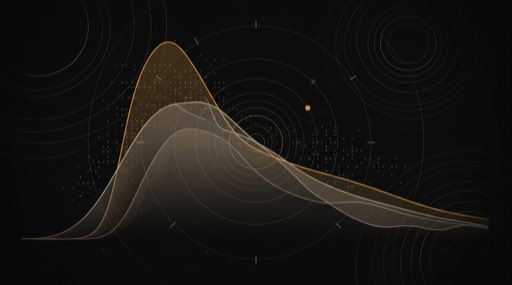
The Interruption Ceiling: Proactive Assistant Behaviour and Mute Rates
Varies proactive-message frequency and measures mute rates. Retention rises to about two unsolicited messages a day and falls sharply beyond; the curve is not monotonic.

Slack drop: 'the RFP scores the model on 40 points and the integration on 5'
A sector owner's note from an RFP evaluation. The weighting is the adoption gate in one line: clients procure for the thing that does not predict retention.

Logged from Claude Code: visible 'not confident' state raised weekly use 40%
Product engineer added an explicit low-confidence state to an internal assistant and watched weekly use rise 40% over the next month. One assistant, one team, no control. Attributed, tried, decays fast.

Enterprise assistant vendor publishes its own retention cohort analysis
Vendor shows week-twelve retention split by integration depth and finds the same ordering we do. Self-interested — it sells integrations — but the cohort sizes are large and the direction matches independent data.

'We upgraded the model and nothing changed'
Short, widely shared post. Upgraded an internal assistant to a frontier model; usage did not move. The comments are a catalogue of the same experience. Kept as the demand-band echo of the telemetry.

'We rolled it out to 4,000 people and 180 still use it. What did we do wrong?'
The question that opened the field, in the words of a chief operating officer. Eleven engagements have asked a version of it since. The assistant in question answered well, raised nothing, and lived in a separate tab.
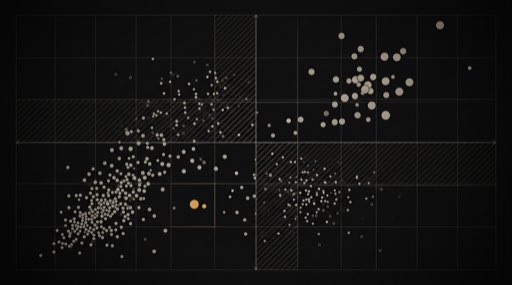
Enterprise copilot survey: 61% of deployments below 10% weekly active use at six months
Survey of 400 enterprises. Establishes the base rate for decay. The report attributes it to 'change management'; the telemetry says product properties.
Claims · 5 supporting, 1 refuting
The atoms.
A document cannot go stale; an assertion can. Claims are immutable and stamped with the extractor that produced them, so staleness, diffs and the graveyard operate at claim level.
Organisations do not procure for the four properties because the procurement conversation is about the model; the gate is adoption, not capability.
Integration depth in one workflow predicts retention better than model choice or breadth of deployment.
Assistants with a proactive surface retain roughly three times the weekly active users at week eight of assistants that only respond to prompts.
Visible uncertainty and honest refusal increase use rather than reduce it; people return to an assistant that tells them when it does not know.
Proactivity above a low threshold becomes interruption and drives the assistant to be muted; the curve is not monotonic.
Upgrading to a stronger model materially improves week-eight retention.
Position history · the diff is the product
4 validation runs against a fixed brief. Confidence 38% → 60%.
Calibration claim strengthened by a paper and a second engagement. Proactivity has a ceiling; above it the assistant gets muted. Standing answer drafted; experiment proposed.
- Visible uncertainty and honest refusal increase use rather than reduce it; people return to an assistant that tells them when it does not know.
- Proactivity above a low threshold becomes interruption and drives the assistant to be muted; the curve is not monotonic.
- c-effective-assistants-3 ↑ 0.58 → 0.66
Scoring · ordinal bands
Agents propose. A named human commits.
Uncommitted scores are visibly marked and never leave the building. Bands, not point estimates — false precision is the tell that a number was generated rather than derived.
Impact
committed · AWEvery assistant engagement the firm has sold is exposed to week-three decay.
Timeline
committed · MMNothing here needs a capability that does not exist; it needs a checklist and a will to use it.
Demand
committed · AHEleven engagements asked why usage collapsed. The most-asked question in Engel this half.
Cost of being wrong
agent-estimatedA wrong checklist costs an engagement's credibility, not a client's business. Agent-estimated.
TAM
agent-estimatedAgent-estimated from enterprise assistant spend; the field is about capturing value already being spent. Uncommitted.
Workforce readiness
committed · MMDelivery teams can build all four properties; they are not asked to.
Relevance · per vertical
Why it matters here, or explicitly does not.
Ranking is per vertical, not global. Sector owners commit notes against agent drafts.
Two internal knowledge assistants in banking clients decayed to under 5% weekly use; both answered well and did nothing else.
Mechanism · Proactive surfacing of policy changes; visible confidence on regulatory answers; write access to the case system.
Clinical admin assistants are the highest-stakes case for refusal honesty; a confabulated answer about a medication is a safety event.
Mechanism · Refusal-first design with a named human fallback; calibration shown on every clinical answer.
Merchandising copilots that live outside the planning tool are not opened; the one inside it is.
Mechanism · Integration into the range-planning workflow rather than a separate chat surface.
Proactivity in a public-sector assistant raises a records and accountability question — who authorised what it raised — that has not been answered.
Mechanism · Would need an accountability model for unsolicited output.
Red team · the strongest case against
The strongest case against: the four properties are a post-hoc story fitted to three engagements' telemetry. Assistants with proactive surfaces and deep integration are also the assistants that had better product teams, more budget and executive sponsorship, and those explain retention on their own. The field may be describing good product management and calling it a research finding.
- —No controlled comparison exists. Every retention difference we cite is confounded by team quality, budget and sponsorship.
- —The calibration result rests on one assistant and one engineer's report; the academic evidence on calibration and trust is mixed and some of it points the other way.
- —Retention is not value. An assistant people keep opening because it interrupts them usefully may be costing more attention than it saves; nobody has measured that.
Source diversity
- ML / HCI research30%
- Vendor10%
- Practitioner / LinkedIn15%
- Analyst10%
- Internal / Engel35%
A field supported by one epistemic community is a flag, not a finding.
Cross-pollination · typed joins
Connected, not merely similar.
Enabling, compounding, substituting, blocking. A satisfied dependency trigger is a far stronger signal than semantic proximity.
Proactivity and integration depth taken to their limit is an ambient agent; the two fields share a retention curve.
Week-eight retention is the ROI denominator; an assistant nobody opens has infinite cost per use.
Calibration is measurable only with a harness that scores confidence against correctness; the judge-calibration work is a prerequisite.
If the four properties become vendor defaults, the field dissolves into table stakes. Microsoft and Google are close.
Share graph
Provenance running forward.
Discovery, not accountability. No counts, no rankings, no rollups to managers.
Convergence · who else is here
- AHAmber Hall · Sector owner · Banking2 drops
- ATAndrew Tran · Senior Data Scientist · measurement1 drop
- SLSylvia Liu · Analyst · Health1 drop
- OVOliver Vu · Analyst · product engineering1 drop
- MMMichael Menache · Lead Analyst · SDLC1 drop
- MAMario Attard · Senior Analyst · Telco delivery1 drop
- ?Anonymous · Anonymous drop1 drop
- HBHarley Barnes · Executive Manager, AI Technology · exec sponsor1 drop
Several people’s drops meet here. An informal working group already exists and probably does not know it.
Lineage
What this field produced, and what it killed.
Experiments, recommendations and graveyard entries stay attached. The reasoning that killed a claim is the reusable asset.
No experiments, recommendations or graveyard entries yet. That is what a candidate looks like.
Open questions · return to the pile
Every run leaves a record. Separately, its question either closes or returns to the pile with notes — which is what the next person proposing the same thing will see.
- 01In a controlled comparison, how much of the retention gap survives once team quality and sponsorship are held constant?
- 02What is the interruption ceiling for a clinical or banking user, and is it the same as for a knowledge worker?
- 03Is retention the right measure, or is it attention cost per useful action?
Notes · anyone in the firm
What people have written on this.
The person who knows a claim is wrong is usually not the person who wrote it. Corrections, objections and questions are owed an answer and stay open until the field owner says what they did; context and use notes stand as they are.
Notes · 0
Anything here reaches at most the firm — a note cannot travel further than what it is written on.Nothing written on this yet. The useful notes are the ones from people who are not in the lab — that is where the correction usually comes from.